Car Smash: When Destruction Is the Entire Game
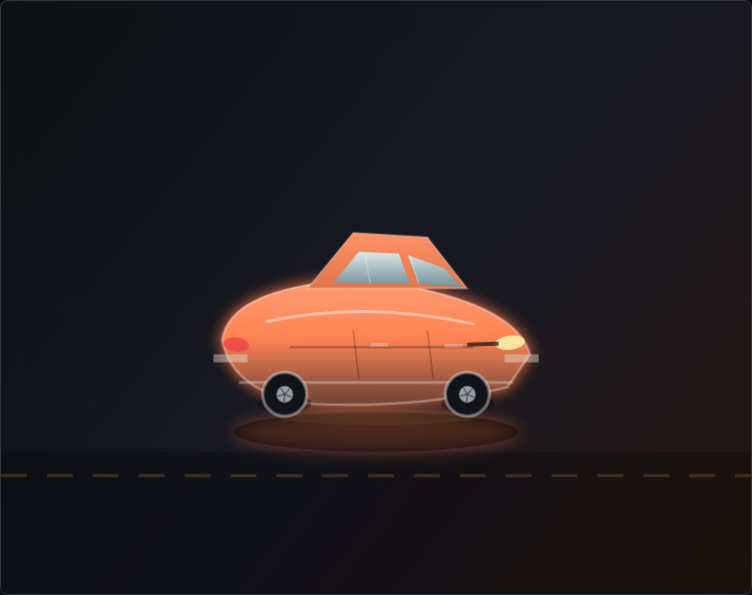
Car Smash started as a joke. I was trying to think of the most mindless possible browser game, and "tap a car until it's flat" came to mind. I laughed, then immediately started building it. The thing about purely destructive games is that they live or die on one thing: does the act of destruction actually feel satisfying? Spoiler — making it feel satisfying is much harder than it sounds.
Designing Destruction That Feels Real
My first prototype just swapped between two states: intact car, then flat car after enough taps. It felt like toggling a checkbox. The problem was there was no journey, no visible progress between tap one and tap final. I started breaking the destruction into stages — five distinct SVG states per vehicle, each one progressively more crumpled. I tweaked line positions, adjusted wheel squish, added window crack overlays. Every vehicle needed its own destruction sequence because a compact car flattens differently from a truck or van. That meant designing 50 unique SVG frames across 10 vehicles. I didn't expect to be doing vehicle illustration for this project, but here we are. The result was worth it. Players actually slow down near the end of each vehicle just to watch the final squish frame land.
The Tap Threshold Problem
Early testers all said the same thing: "How many more taps?" They had no idea where they were in the destruction process. I added a progress bar, which helped, but numbers felt even better — "47 of 60 taps" told players exactly where they stood. But then I had to decide: should all 10 vehicles require the same number of taps? My gut said variety, so I gave lighter vehicles 30 taps and heavier ones up to 100. Playtesters bounced off the 100-tap vehicles hard. Reaching a truck after coasting through three 30-tap sedans felt like punishment. I ended up narrowing the range to 40–70 taps and scaling it so vehicles get progressively heavier as you advance through the set. That pacing made the game feel like it was building toward something rather than randomly hard.
Vehicle Order and the Feeling of Progress
Sequencing the 10 vehicles turned out to matter more than I expected. I started with alphabetical order — Bus, Car, Helicopter, Jeep — which was random from a difficulty standpoint and felt disconnected. I rearranged them by size: compact car first, then sedans, then SUVs, then trucks, then the bus last. Now each vehicle represents a real progression in mass and resistance. There's something satisfying about graduating from a little hatchback to an actual city bus. I also added a vehicle-reveal animation between rounds — a brief "incoming" moment before the next car drops into frame — which gave players a natural breathing point and a moment to feel accomplished before the next challenge started. Small thing, but it transformed what felt like a grind into something that felt like a journey.
Browse All Games