Memory Grid: What Building a Memory Game Taught Me
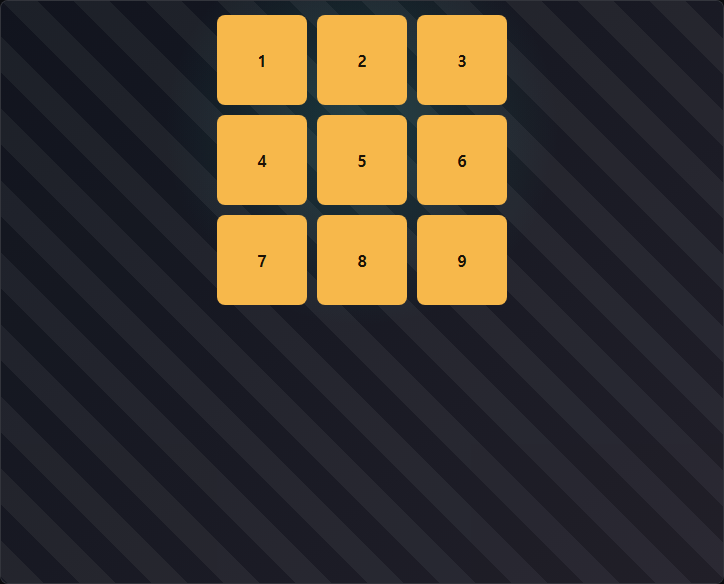
I assumed Memory Grid would be the easiest game I'd build for this collection. Tiles light up, you remember them, you tap them back. How hard could it be? The answer turned out to be: surprisingly hard to get right. Every parameter I could adjust — display duration, grid size, number of tiles per round, recall time limit — interacted with the others in ways that weren't obvious until I watched people fail in specific ways. This post is about what those failures taught me.
The Display Duration Problem
The most critical variable in any memory game is how long you show the pattern before hiding it. Too short and the game feels rigged. Too long and there's no challenge because players can mentally trace each tile individually at a leisurely pace. I started at 1500 milliseconds and it felt frantic for new players. At 3000 milliseconds, experienced players were bored. The breakthrough came when I stopped thinking about it as a single duration and started thinking about it as duration-per-tile. Each lit tile in the sequence contributes roughly 400 milliseconds to a comfortable viewing budget. Two tiles shown simultaneously get 800 milliseconds. Five tiles get 2000 milliseconds. This formula scales naturally — longer sequences get more time not because the game goes easy on you but because the cognitive budget legitimately expands proportionally. Players told me the game finally felt "fair" when I switched to this model, even though some rounds are objectively harder than others.
Grid Size and the Limits of Working Memory
I built the first version on a 3x3 grid because it seemed manageable. Nine tiles, easy to scan. But I found that on a 3x3 grid, sequences of four or more tiles tended to feel less like memory challenges and more like spatial puzzles — players would instinctively group the lit tiles into shapes (an L, a diagonal) rather than remembering individual positions. On a 4x4 grid, that chunking strategy breaks down faster because the patterns look less like recognizable shapes. The higher cell count also made single lit tiles feel more meaningful — a lit corner on a 4x4 grid is a specific location in a way a corner on a 3x3 grid simply isn't. The 4x4 grid also scaled sequence length more gracefully, letting me reach sequences of seven or eight tiles before the grid started to feel crowded. Working memory research consistently shows about seven items as a human capacity limit, so building toward that limit on a 4x4 grid gave me useful headroom.
Designing the Recall Phase Without Creating Frustration
My original design required players to reproduce the sequence in exact order. Players hated it. The order requirement added a second layer of memory task on top of the spatial one — remembering not just which tiles but which tile came first, second, third. For most people, that's a different cognitive skill, and failing because of ordering felt arbitrary and unfair when they had clearly remembered the correct positions. I switched to unordered recall — tap the right tiles in any order — and the reception improved dramatically. To compensate for the reduced difficulty, I tightened the time window for the recall phase and increased the sequence lengths. The result is a game that tests what it says it tests — spatial working memory — rather than accidentally testing something else and then blaming players when they fail at it.
Browse All Games