Otter Pop: Why Adding a Personality Changed the Whole Feel
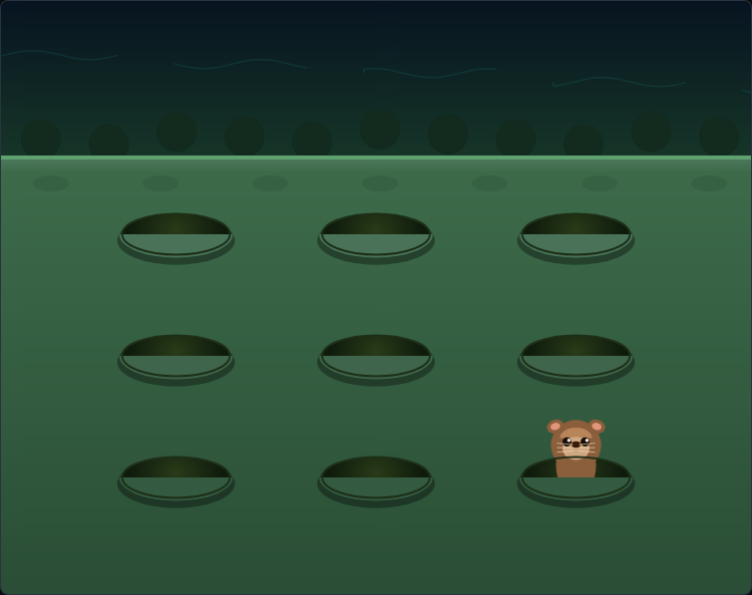
When I first built Otter Pop, it was just called "Burrow Tap." Circles popped up from holes on a grid, you tapped them, you got points. It worked mechanically — the core loop was solid — but something was missing. The game had no soul. Swapping circles for otters, and then actually giving those otters personality, is the change that turned a generic tap game into something people actually remember playing.
Starting With the Mechanic, Not the Theme
The original game was built theme-agnostic. I wanted to nail the core feel first — targets appear, you tap them, they disappear, new ones appear — before committing to any art direction. This approach worked well for the timing model. I spent the first week entirely on numbers: how long targets stay visible, how quickly new ones spawn, how much score pressure the timer creates. I built a spreadsheet tracking the "opportunity window" per stage — the average milliseconds a target is visible. Starting at 1400ms in stage one and ramping down to 550ms by stage ten. That progression curve was nailed down in pure abstract form before I drew a single otter. It meant that when I did add the theme, the mechanical foundation was already solid, and the art could serve the game rather than distract from it.
Why the Otters Changed Everything
The shift from circles to otters happened almost by accident. I was looking for a theme that would make "things popping up from holes" feel natural and found otters in riverside burrows. But the real transformation wasn't the otter shape — it was the idle animations I added almost as an afterthought. When an otter pops up and you don't tap it in time, it doesn't just disappear. It gives a small headshake, then ducks back down. When you tap one successfully, it briefly raises both arms before vanishing. These animations take about 150ms each. They add no gameplay information whatsoever. But they make every interaction feel like it has a tiny story. Playtesters described the game as "cute" and "funny" — words no one used about Burrow Tap. The mechanic hadn't changed at all. The personality did everything.
Tuning Speed Without Killing Fun
The hardest design problem in Otter Pop was the speed curve at high stages. Stage eight and nine push the visible window down to 600–650ms, which is genuinely demanding. Early versions made players feel punished rather than challenged — the otters felt mean, not mischievous. I added two things that fixed this. First, I made the pop-up animation itself slightly faster at higher stages, so otters reach their full visible position sooner, giving players the full window even though the total time is shorter. Second, I added a brief "ready" pause — a tiny wobble at the burrow entrance before the otter fully emerges — that gives the player a half-beat of anticipatory warning. This tells your nervous system "something is about to happen here" before the full target appears, which makes fast stages feel readable rather than random. The game got harder in a way that felt fair, and fair difficulty is what keeps people playing one more stage instead of quitting.
Browse All Games