Water Balloon Blitz: Adding a Penalty Changed Everything
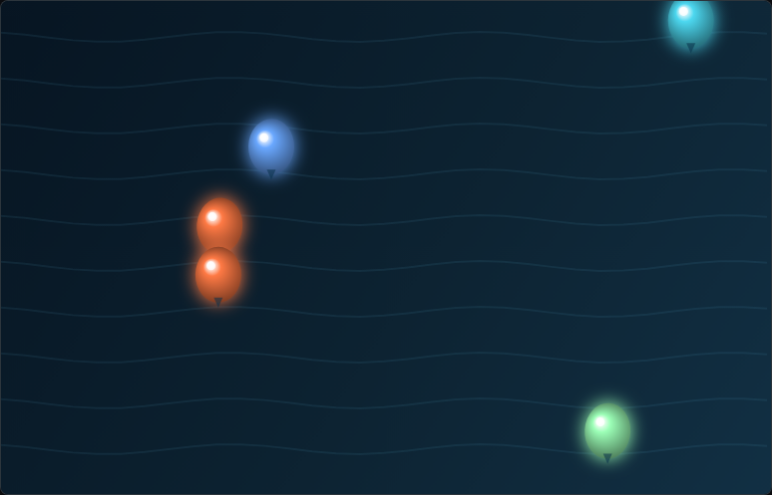
Water Balloon Blitz started out as the most obvious game I could imagine: balloons float up, you tap them, numbers go up. It was playable. It was also completely boring. The turning point came when I added bomb balloons and made tapping one subtract from your score. That one change rewired how players interacted with everything on screen, and I want to walk through exactly why it worked the way it did.
Why the Original Had No Tension
The first version was pure positive reinforcement. Every balloon you tapped added points. There were no wrong answers, no decisions to make — just tap as fast as possible. Playtesters would get a high score on their first attempt and feel almost nothing. There was no emotional arc to the session. I realized the problem was that every object on screen had identical value. Nothing was a threat. When I introduced bomb balloons — visually distinct with a dark body and a red fuse — something shifted immediately. Now players had to look before they tapped. Suddenly the game was asking something of them, which meant it could also reward them. The cognitive load of scanning for bombs before committing a tap turned casual clicking into actual decision-making. The game became readable as a space with good things and bad things in it, which is the foundation of almost every compelling game design.
Calibrating the Penalty to Create Real Stakes
Getting the penalty amount right was a long process. Too small and players ignored bombs entirely — a minus-one hit barely registered emotionally. Too large and players would get anxious to the point of paralysis, tapping nothing while their timer ran out. I settled on a penalty equal to three times the reward for a water balloon. That ratio meant that a single bomb tap undid three successful pops, which gave it enough bite to matter without making recovery feel impossible. I also introduced it gradually — bombs appear only from stage three onward, and their ratio climbs across the ten stages. Early stages let players build confidence and score buffers. Later stages compress the safe windows between bomb appearances. That escalation curve kept players engaged across all ten stages without the difficulty feeling like a wall they hit without warning.
Designing Ten Stages That Each Feel Different
Ten stages sounds like a lot for a tapping game, but most of the differentiation comes from adjusting only three variables: balloon rise speed, spawn frequency, and the bomb-to-balloon ratio. Stage one is slow and generous — almost tutorial-paced. By stage five, balloons are rising noticeably faster and bombs appear about one in four spawns. Stage ten is close to overwhelming on purpose: the rise speed is high enough that you have maybe two seconds per balloon before it escapes, and bombs come frequently enough that you have to actively track them instead of reacting. I added a brief congratulations screen between each stage with the current score displayed prominently, because I found that players who saw their number growing were more motivated to keep going than those who just saw the stage number increment. Celebrating progress, even small progress, keeps the loop going.
Browse All Games