Space Shooter: Why I Let the Ship Fire Itself
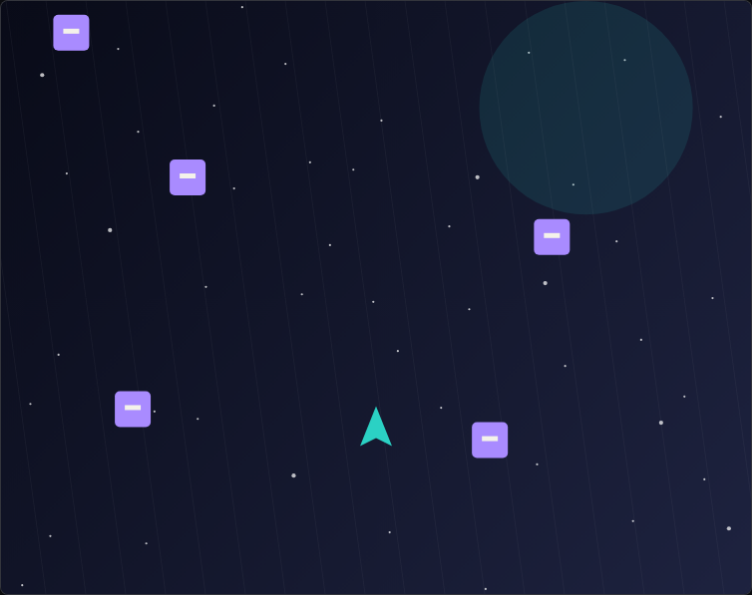
Every space shooter I grew up playing had the same core loop: move your ship, aim at enemies, hold the fire button. When I started building Space Shooter for the browser I added a fire button without thinking twice. It felt essential. But after a week of testing I deleted it entirely and let the ship fire automatically on a fixed interval. That decision changed the entire character of the game — and I think it was exactly right.
Why the Fire Button Was Getting in the Way
The problem with manual fire in a browser shoot-em-up is split attention. When you're holding Spacebar to fire AND using arrow keys or WASD to dodge, your left hand is doing two incompatible things. Holding a fire key down doesn't feel like a decision — it just feels like friction. Players would mash the fire key, stop mashing to focus on dodging, then forget to start mashing again. The actual interesting choices in the game — when to weave through a bullet pattern, which enemy cluster to prioritize — were being overshadowed by the tedium of keeping a key held down. Auto-fire removed that cognitive tax. Suddenly 100% of the player's attention went to movement and positioning, which is where all the real gameplay lived anyway. The game immediately felt snappier and more fluid.
Balancing Auto-Fire Rate Against Enemy Count
Once the ship fires automatically, the fire rate becomes a critical balance lever. Too fast and the screen fills with friendly projectiles that obscure the enemy bullets you need to dodge — ironic visual clutter. Too slow and you feel helpless: enemies pile up faster than you can clear them. I settled on firing one bullet every 300 milliseconds, which at typical enemy health of one hit meant I could clear a full row of five enemies in about 1.5 seconds of good positioning. That gave the game a measurable "reward zone" for flying directly under an enemy cluster: stay locked in and you destroy it efficiently. Deviate and the time-to-kill stretches out. It turned positioning into a scoring optimization game, not just a survival game, which felt like a meaningful upgrade to what was there before.
Enemy Fire and the Fairness Constraint
The other side of the auto-fire decision was that enemy bullets had to be designed with extra care. When the player can't choose when to fire, the skill expression lives entirely in dodging. That means enemy bullet patterns had to be readable and fair in a way that wouldn't have mattered as much with a manual-fire system. I found that bullets faster than a certain threshold became reaction-impossible on a standard 60fps canvas, so I capped enemy projectile speed and compensated by increasing bullet density as waves progressed. Multiple slow bullets you have to weave through felt far more satisfying to dodge than single fast bullets that felt like coin flips. The final wave structure — sparse to dense, slow to moderately fast — came entirely from that constraint, and I think the game is more interesting for it.
Browse All Games