Zombie Survival and What I Learned About Arena Design
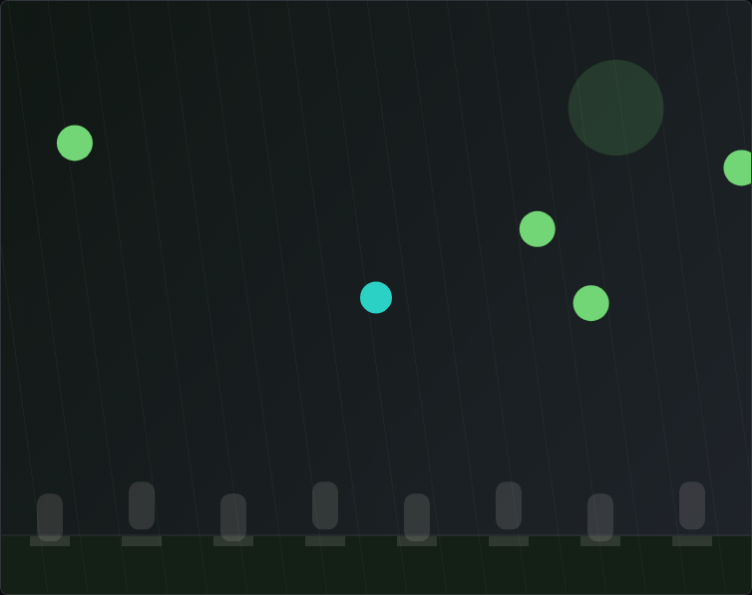
Zombie Survival is a game where enemies come at you from all directions and you just have to keep moving. That sounds simple enough to build, and in some ways it is — but I spent more time agonizing over the shape and size of the arena than I did over any other aspect of the game. A wrong-sized arena and the whole thing collapses. Here's what I tried and what actually stuck.
The Arena Shape Problem
My first arena was a 600x400 rectangle. It felt too easy to exploit: players would simply run laps around the perimeter, staying ahead of the zombie cluster because the corners gave them natural turning points. Zombies, following naive direct-chase AI, would bunch into a single herd that trailed behind at a fixed distance. After about thirty seconds you could just keep jogging and never die. I tried shrinking the arena — but small arenas with direct-chase AI became instant death sentences because there was nowhere to build a gap. The breakthrough came when I staggered the spawn edges. Instead of all zombies spawning simultaneously from the same edge, they now spawn in waves from randomized sides, which breaks the herd formation. The player can no longer predict where the next threat is coming from, and that unpredictability alone transformed the feel from "running loop" to genuine survival tension.
How Many Zombies Is Too Many
I iterated through starting counts of 4, 6, 8, and 10 before landing on 5. With 4 zombies, experienced players found enough space to breathe indefinitely once they understood the chase AI. With 8 at the start, newer players were overwhelmed before they had a chance to understand the movement system. 5 felt like the sweet spot: there was always at least one zombie blocking a clean escape route, but there was also always a gap to aim for. I also added a wave-escalation rule: every 20 seconds that the player survives, one more zombie enters the arena. This meant the difficulty scaled without punishing beginners in the first moments of play. Getting that initial count right made everything downstream feel more natural, and I wish I'd tested enemy counts earlier instead of treating it as a late-stage tuning problem.
Why the Zombie Speed Needed to Stay Slightly Slower Than the Player
This was the trickiest constraint to get right. My instinct was to make zombies and player move at the same speed, forcing the player to rely purely on path-finding skill. In practice, equal speeds meant that any zombie which got close enough to make contact would stay in contact indefinitely — the player could never actually escape. The game felt sticky and unfair. I tested zombies at 75%, 80%, and 85% of player speed. At 75%, skilled players could disengage too easily and the game lost tension. At 85%, there was enough pressure that every mistake cost you positioning, but you could still recover by making better decisions over the next few seconds. That 15% speed advantage is what creates the "oh I can get out of this if I'm clever" feeling that makes survival games satisfying rather than just punishing.
Browse All Games